
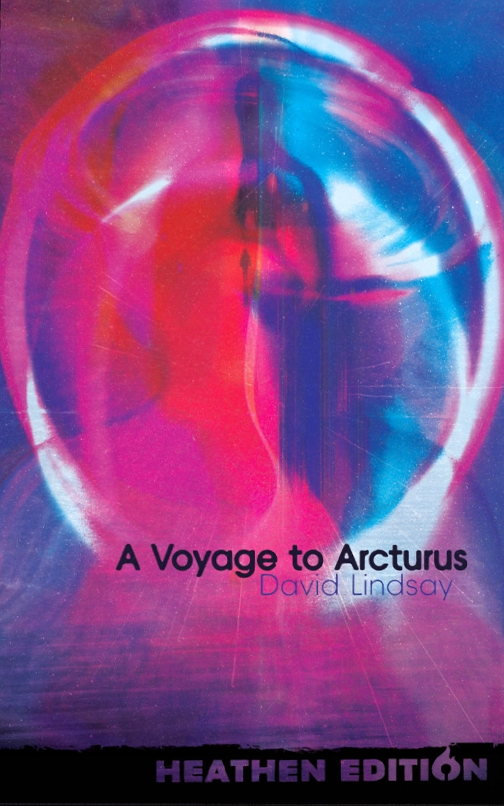
David Lindsay (1876–1945) was a Scottish author best remembered for the 1920 philosophical science fiction novel A Voyage to Arcturus. Fierce in its pursuit of spiritual truth and a moral universe as harsh as it is luminous, the book carved out a singular place in speculative literature. The story follows Maskull on a stark interstellar odyssey 37 light‑years from Earth to Tormance, an uncanny world orbiting Arcturus, where each landscape is less a place than a metaphysical trial — philosophies made flesh, states of mind given weather and terrain, a gauntlet for the soul where every encounter strips away another layer of illusion in search of what Maskull’s own becoming demands of him. Utterly ignored in Lindsay’s lifetime, the work has survived not by popularity but by revelation, long carrying the aura of a cult scripture: passed hand‑to‑hand, whispered about by writers and mystics, admired for its intensity of imagination and its refusal to flatter the reader’s desire for easy meaning. It is not a comforting book. It is an uncompromising myth of exile and ordeal that detonates logic, sears the mind, and leaves you forever altered.
